Last week, when I was helping a client debug a new automated production line, I encountered a network latency issue. After several hours of troubleshooting, I finally found the culprit – a five-year-old switch that couldn’t handle the current power supply demand and was silently slowing down the network speed by 40%.
Introduction:
Ethernet Switches are the devices that help establish a network. They can help you form the most straightforward and also the most complex networks. The speed of the Ethernet Switches has evolved with time. They now range from Ethernet to Fast Ethernet switches. Also, they onwards go to Gigabit Ethernet. They differ depending on their tendency to speed up the network.
Ethernet Switches, known as network bridges, are essential building blocks of a network. These Switches have been in use for the longest of times. The need for various types of Ethernet Switches arises from time to time. It does when installing networks of various levels at different sites.
An Ethernet Switch tends to have a quicker communication rate within the organization. It is more proficient and provokes secure communication protocols. An Ethernet Switch anticipates activity between two nodes on the same route. They permit you to interface a comprehensive arrangement of nodes together. Following this way, you shape a solid, organized structure.
The simplest form of a network includes the networks that we have at home. These Switches can be less expensive. The networks like these may consist of an internet modem. It would have a connection to a four-port Ethernet Switch to connect devices further. Any person who might not even have any technical skills can install an Ethernet Switch with ease.
The most complex of networks requires combinational use of high costs and low costs Ethernet Switches. Internet service providers generally use them all around the world. These types of Switches must be highly experienced and skilled personnel.
Similarly, educational campuses, enterprises, and data centers have their requirements. They consider them when forming a network. These forms of the network are costly and must Switches that can provide resilient networks.
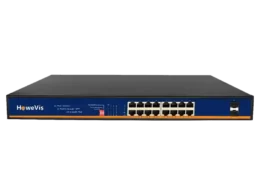
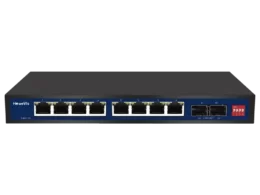
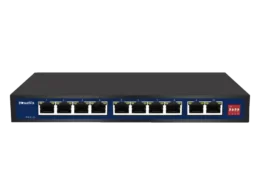
Network Establishment over Ethernet Switches.
By now, we already know how Ethernet Switches help form a network. The working of the network formed on Ethernet Switches is simple. It centralizes communication upon the principles of packet or frame switching.
A frame, whereas, is a small collection of data, more like a parcel containing something of importance. It gets sent as a unit package over the Ethernet Switch network.
Generally, multiple Ethernet cables are plugged into the Switch and extended to be inserted into other devices to connect. The Ethernet Switches manage the flow of data across all the connected devices. The Ethernet Switches receive the data in the form of packets or frames from other related devices. After reading the frame’s MAC addresses, the data gets redirected to the nodes where it should be.
The Ethernet Switches are intelligent enough to keep track of all its connected devices and the data that flows towards them. This factor of Switch maximizes its efficiency and the security of the network.
Limit of Devices to be Connected
The total number of devices connected over Ethernet Network depends upon the router’s number of Ethernet Switches.
A network usually starts when an internet device/modem needs to be expanded. It may vary from as few as four ports to ranging at 8, 16, 32, and 64 ports at maximum. However, it is important to consider that all the following connected devices would share the network’s bandwidth.
Types of Ethernet Switches
There are two types of Ethernet Switches available in the market. The Managed Ethernet Switches and the Unmanaged Ethernet Switches. The prior one enables the user to change the settings of the port. It further grants the permission to control and mold the structure of the network. Through Managed Ethernet Switches, users can have more power over the data transmission.
Whereas the latter, The Unmanaged Network Switch, does not require enormous setups. A home usually has this type of network. They are plugged into work and later removed when the work gets done. The routers and the devices interconnected at homes, labs, or workspaces, are due to fall under this category.
In the current times, Unmanaged switches are the type that is widely in use. They are available in series with a difference in speed. The Fast Ethernet Switch is one of a kind with a rate of 10 or 100 Mbps. The Gigabit Ethernet Switch of 10,100/1000 Mbps, and the 10GbE Switch of speed 10/100/1000/1000 Mbps.
The Gigabit Switch is an extensively used Ethernet Switch. For higher transmission speed, a 10GbE Switch is also an option. You can choose your Ethernet Switch from the series that suits your requirements.
Benefits of Using Ethernet Switch
Ethernet Switches Increase the Capacity Ethernet Switches that have more incredible transmission speed. They can help you increase the data transfer capacity among the nodes.
- They Reduce Burden
Ethernet Switches can lessen the workload on individual nodes.
- Less casting Impacts
Networks that use switches will have fewer casing impacts. It is because of the way that switches make impact areas for every association.
- Ethernet Increases the Network Bandwidth
The Ethernet Switches increase the bandwidth of the overall network.
- Reduced Data Collison
The networks that get established on Ethernet switches tend to have a lesser frame and data collision.
- Secured Data Transmission
The Ethernet Switches guarantee secure data transfer since the Switch is a stand-alone server.
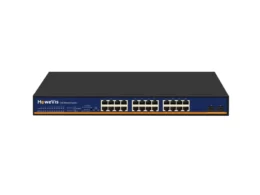
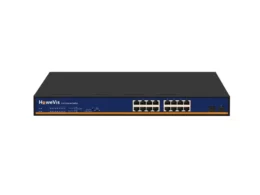
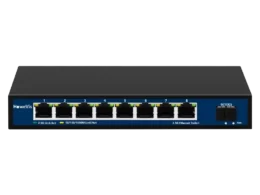
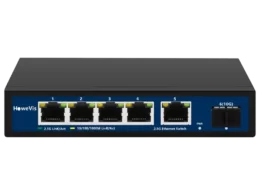
Do Ethernet Switches Reduce Speed?
So, do Ethernet switches slow things down? Well—yes, but usually not in a way you can’t fix. Switches are actually built to make your network run smoother by smartly routing traffic. But if the hardware’s outdated, it’s set up wrong, or it’s just overloaded, that’s when it starts dragging things down.
Today’s switches—when you pick the right one and set it up properly—handle data at full line speed (meaning no artificial slowdown) with barely any delay—think microseconds, not milliseconds. Most of the time, the “slowness” people notice isn’t because the switch is inherently flawed—it’s because what you’re asking it to do doesn’t quite match what it’s built for.
What Actually Slows Down a Switch?
Spoiler: it’s rarely just one thing. A switch’s real-world speed depends on how several parts work—or don’t work—together. Below, we’ve broken down the main culprits—including two that people often miss: Power over Ethernet (PoE) draw and how busy the network really is.
| Factor | Description | Impact on Speed & Performance |
|---|---|---|
| Switch Backplane Bandwidth | The total internal data-carrying capacity (in Gbps) that allows all ports to communicate at full speed simultaneously. | Critical: Insufficient bandwidth causes internal congestion, forcing ports to wait their turn to transmit data, leading to lag and packet loss. |
| Port Speed & Type | The maximum data rate (e.g., 100 Mbps, 1 Gbps, 10 Gbps) an individual port supports. Must match or exceed your devices’ and uplink’s capabilities. | Fundamental: A 100 Mbps port will bottleneck a 1 Gbps internet connection or device. Mixing speeds can cause auto-negotiation issues. |
| Power over Ethernet (PoE) Load | Delivering both data and electrical power to devices like cameras, phones, and access points. | Significant: High PoE draw (e.g., from multiple PTZ cameras) consumes switch resources, generates heat, and can throttle overall switch processing power if not designed for full PoE load. |
| Network Load & Traffic Patterns | The volume and type of data (e.g., large file transfers, video streaming, real-time control signals) passing through the switch. | Variable: High, simultaneous traffic from many devices can overwhelm buffer memory. Broadcast storms (common in poorly designed networks) can cripple performance. |
| Switch ASIC & Memory | The specialized chip (Application-Specific Integrated Circuit) and buffer memory that handle packet forwarding decisions. | Core Determinant: Higher-quality ASICs forward packets faster with lower latency. Insufficient buffer memory leads to dropped packets during traffic bursts. |
In 2026, how should you choose a switch?
The market is changing quickly. For most homes and small offices, a plug-and-play Gigabit unmanaged switch is still reliable and hassle-free. But for companies, networks with lots of IoT devices, or any environment that requires control, a smart or fully managed switch becomes essential—it makes traffic segmentation and monitoring much easier.
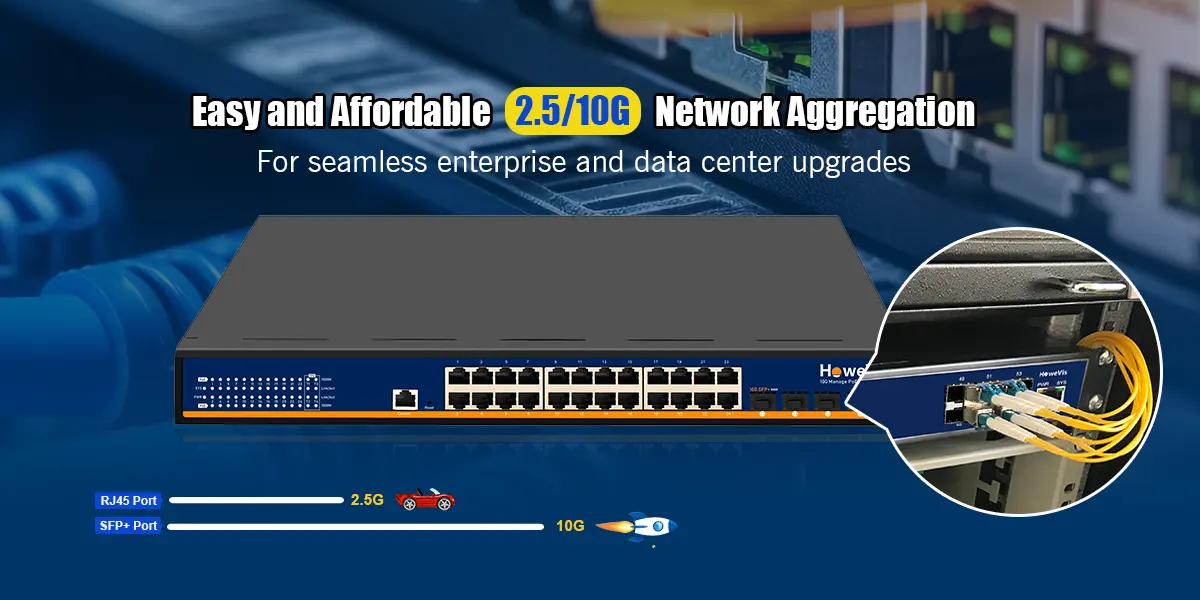
Looking ahead, 2.5G and 5G Multi-Gigabit Ethernet (also known as NBASE-T) switches are becoming the new hot trend. They offer an affordable speed boost for modern devices without requiring a full upgrade to 10 Gigabit cabling. Plus, future switches will increasingly integrate network analytics and AI management features, allowing them to predict congestion and optimize performance on their own.